Last weekend, I had the pleasure of working as one of the Appeals Judges at the Regional Championship in Bologna. It was a great time and I’d love to do it again, but it was also easily the busiest event I’ve ever worked. What kept me so busy? Well…
What makes the card so controversial? There were three different calls about this one which came up again and again: two versions of “was this trigger missed?” and an issue of every monk looking the same. Any one of these is pretty straightforward, but having all of them wrapped together on one card, from the brand-new set that players haven’t had a lot of chances to play in tournaments yet, adds up to a lot.
Missed Trigger Scenario #1
The most common call, by far, went something like this:
AP: Cast Cori-Steel Cutter. Cast Spell #2
NAP: In response, cast Spell #3
AP: In response, cast Spell #4
NAP: In response, cast Spell #5
The players build up the stack, back and forth, and finally begin start resolving things. After resolving Spell #5, #4, and #3, AP would reach for their token box and begin putting a Monk onto the battlefield before beginning to resolve Spell #2. At this point NAP would raise their hand for a judge, believing that AP had missed their trigger because it had not been announced when it went onto the stack.
Looking to the IPG, we can see several bullet points that tell us how to tell if a trigger has been missed:
- A triggered ability that requires its controller to choose targets (other than ‘target opponent’), modes, or other choices made when the ability is put onto the stack: The controller must announce those choices before they next pass priority.
This one doesn’t apply to the Steel Cutter. If the Steel Cutter said “target player creates a Monk token” or the trigger had two modes, one was to make a Monk and one was to do some other effect, then it would match here. Another bullet point from the IPG reads:
- A triggered ability that changes the rules of the game: The controller must acknowledge the trigger or stop an opponent who tries to take any resulting illegal action.
This point got quite a workout recently when The One Ring was everywhere, but making a token is certainly not a match here. This point is for things like Veilstone Amulet.
- A triggered ability that affects the game state in non-visible ways: The controller must make the change known by the first time the change has an effect on the visible game state.
One of the best examples of this is Prowess (which is amusingly also relevant with the Cori-Steel Cutter), but most competitive players are familiar enough with Prowess by now they usually understand how it works. Making a Monk token certainly has a visible effect in the game, so we can see this bullet point isn’t the guidance we’re looking for.
- A triggered ability that causes a change in the visible game state (including life totals) or requires a choice upon resolution: The controller must take the appropriate physical action or acknowledge the specific trigger before taking any game actions (such as casting a sorcery spell or explicitly taking an action in the next step or phase) that can be taken only after the triggered ability should have resolved. Note that passing priority, casting an instant spell or activating an ability doesn’t mean a triggered ability has been forgotten, as it could still be on the stack.
Here we go. We can tell whether a player has remembered or forgotten their Monk-making trigger by looking at the visible game state, so this bullet point is what we’re looking for. In short, this reads that the player has to Do The Thing before doing something that could only happen after Doing The Thing. That is, if the player wants their Monk, they need to make their token before doing something that should happen after the token is made…like, say, resolving Spell #2, which triggered the ability. But they do not need to acknowledge the trigger before then.
This bullet point tells us that for triggers like this, we need to point them out before moving forward with the game. If both players have a flurry of instants, they haven’t done anything to move forward with the game — they’re still in a place where the trigger could exist on the stack.
It’s even fine if the player says out loud “Oh, whoops, I forgot about that trigger.” If they haven’t done something in game to move past it, the trigger is assumed to still be on the stack, and the player can benefit from it.
Missed Trigger Scenario #2
A somewhat analogous recent situation involves everyone’s favorite Praetor, Sheoldred, the Apocalypse. If a player controls Sheoldred and draws their card for the turn, then pauses and thinks for a bit, they’re fine to acknowledge the trigger until they do or say something to show they’re in their main phase and have forgotten the trigger. A common misconception among players goes something like “well, my opponent didn’t say anything about their trigger for XYZ number of seconds, so they must have missed the trigger.” However, sitting back and silently considering their options after drawing a card does not show the game has moved forward from the draw step, regardless of whether the player paused for five seconds or fifteen.
With both Sheoldred and the Cori-Steel Cutter, the key question is if the player has taken a game action that signifies the game has moved past the point the trigger could still be on the stack. When a player casts their second spell in a turn, that triggers the Steel Cutter, so the trigger should be on the stack above the spell. Resolving the spell shows the game has moved past the trigger.
This can get slightly sticky at times, however, because we still want to keep in mind that players are humans (gasp!), and we don’t want to expect them to play like they’re computers. That’s what our old friend Out-of-Order Sequencing is for:
- Due to the complexity of accurately representing a game of Magic, it is acceptable for players to engage in a block of actions that, while technically in an incorrect order, arrive at a legal and clearly understood game state once they are complete. (MTR 4.3)
This means that it’s fine if a player taps three mountains, drops three Burst Lightnings in their graveyard, and says “Kill this and this and deal you two, make a Monk, attack for 400,” even though technically they should have made the Monk before resolving the second spell.
Here’s the key thing: did the player take a bunch of actions together, ending up at a legal board state but getting there just slightly out of order? Or did they cast and resolve all of the spells individually with full priority passes, and, at some point, they realized that they had forgotten about something that they now want to claim?
What’s in a Name Monk?
AP begins their turn controlling a Cori-Steel Cutter equipped to a Monk. They cast two spells and create a second Monk by placing a new token next to their first (equipped) token, without saying or doing anything to indicate the equipment was moving. AP then moves to combat and attempts to attack with both their Monk tokens. NAP calls a judge and explains the unequipped Monk should not be able to attack, because it doesn’t have haste.
The precedent that came to mind here was from Koth of the Hammer. During his time in Standard, Koth appeared in an aggressive monored deck. A common play pattern was to play the fourth Mountain, cast Koth, activate the +1 loyalty ability, and immediately attack for four.
The problem is that Koth’s ability does not grant Haste. This lead to a lot of angry judge calls where it was difficult or impossible to verify any information: NAP believed AP had attempted to attack with the mountain they’d just played, and AP said that just wasn’t so.
Trying to track the difference between multiple permanents that look identical is not normally something that is tested in Magic, and it can feel pretty similar to playing Say The Magic Word games that we try to steer clear of.
Kevin Desprez had an [O]fficial post on the topic several years ago, which I also looked to in this situation. While a lot of policy has changed since 2016, this still seemed applicable. As an analogy: if AP has a Grizzly Bears in play, taps two forests and drops a new Grizzly Bears into play tapped, saying “attack for two,” I think we all know what’s going on and I would not issue a Game Rule Violation.
I believe the important thing here is the card names. It doesn’t matter if one copy is foil and the other isn’t, or one is in German and the other in Italian…both game pieces are named Goblin Rabblemaster so they’re interchangeable.
Bringing that philosophy back to Cori-Steel Cutter: the game state is visually identical whether AP moves the equipment or not. They have a Monk, and a Monk wearing the equipment. If I took some pictures of games and asked you to sort them into groups based on whether the Cutter player had chosen to move the equipment or not, you wouldn’t have much luck. When AP attacks with both tokens, in my opinion they’re making their intent readily apparent and the game state is clear enough.
The wrinkle here is that sometimes, on some board states, it might actually matter. It’s easy to imagine scenarios where AP casts a cantrip to trigger the Steel Cutter and depending on what cards they see they might want to move it, or not. My experience so far is that in these situations, AP is more likely to be clearly communicating what they’re doing, so these spots don’t become judge calls. If it actually matters in the game, I think we should not be rewarding AP for creating ambiguity — a good general rule is that we want to reward players for communicating with each other.
At RC Bologna the only calls I took along these lines were ones where a helpless, tapped-out NAP was just trying to “dagger” AP on a technicality.
Even More Triggers
The common call here was something like: “Judge, my opponent wants their Oculus trigger, but I already drew my card for the turn, so they missed it.”
So, does AP drawing their card for the turn mean that NAP has missed their upkeep trigger? Luckily, the answer here is very clear and unambiguous: it depends.
Wait. What?
The key question in this case is whether the Non-Active Player gave the Active Player permission to move forward with the turn. AP isn’t able to cause NAP to miss their trigger by moving quickly. If AP is asking for an OK sign at each step of the turn, and getting it, then NAP has certainly missed their Oculus trigger. They gave AP the go ahead to move past the point of the trigger which demonstrates they missed it.
The more common situation is something like: AP untaps with one hand and simultaneously draws with the other, attempting to rush the game past the point of the trigger. For this, let’s go to the IPG, where an often forgotten bit of the Missed Trigger philosophy reads:
Players may not cause triggered abilities controlled by an opponent to be missed by taking game actions or otherwise prematurely advancing the game. During an opponent’s turn, if a trigger’s controller demonstrates awareness of the trigger before they take an active role (such as taking an action or explicitly passing priority), the trigger is remembered.
Infraction Procedure Guide
This means that if AP thinks they’re in their draw step or even later before NAP points out their upkeep trigger, if NAP has not yet engaged in the turn (nodding along to a phase change, saying “resolves” to a creature cast, etc) then NAP is in the clear and can have their trigger.
Finally, Not A Trigger
The last call in our Policy section concerns one of our Partial Fixes. This corner of the IPG is suddenly getting quite a workout in Tarkir: Dragonstorm Standard.
Game Rules Violation is the big bucket we dump any fixes into if they don’t meet any of the more precise definitions of the other Game Play Errors. We try to fix our problems with a precision scalpel, but if that won’t work, we bring out the sledgehammer that is GRV.
But even within GRV there are a couple of more delicate fixes we need to consider before finally throwing up our hands and arriving in despair at the GRV endboss: rewind, or don’t.
These more precision instruments are the Partial Fixes. If something has gone wrong in the game but can be fixed cleanly by one of the Partials, we can just reach into the game and sort things out without needing to rewind a bunch of actions.
If an object is not in the correct zone, the exact object is still known to all players, and it can be moved with only minor disruption to the current state of the game, put the object in the correct zone. This only applies if the object being in the wrong zone is the Game Rule Violation, and not if it is the consequence of a different error.
Infraction Procedure Guide
There are a lot of cards in Standard at the moment that move cards between various zones. This partial fix can help us sort things out and get the cards into the right zone. Some common spots where this would apply include anytime a player has:
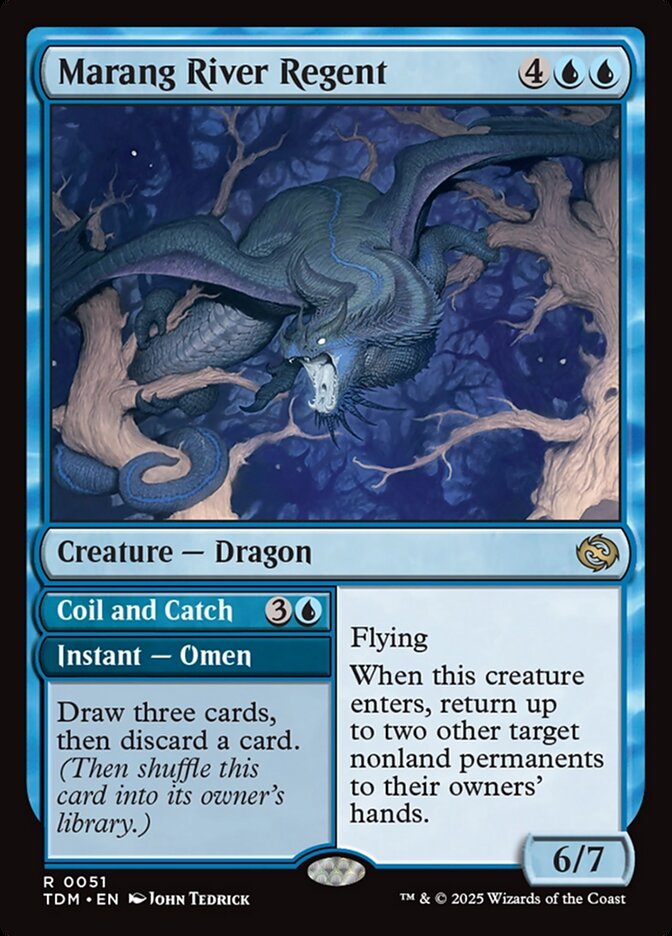
- Cast the Omen side of Marang River Regent but put it in their graveyard instead of shuffling it into the library
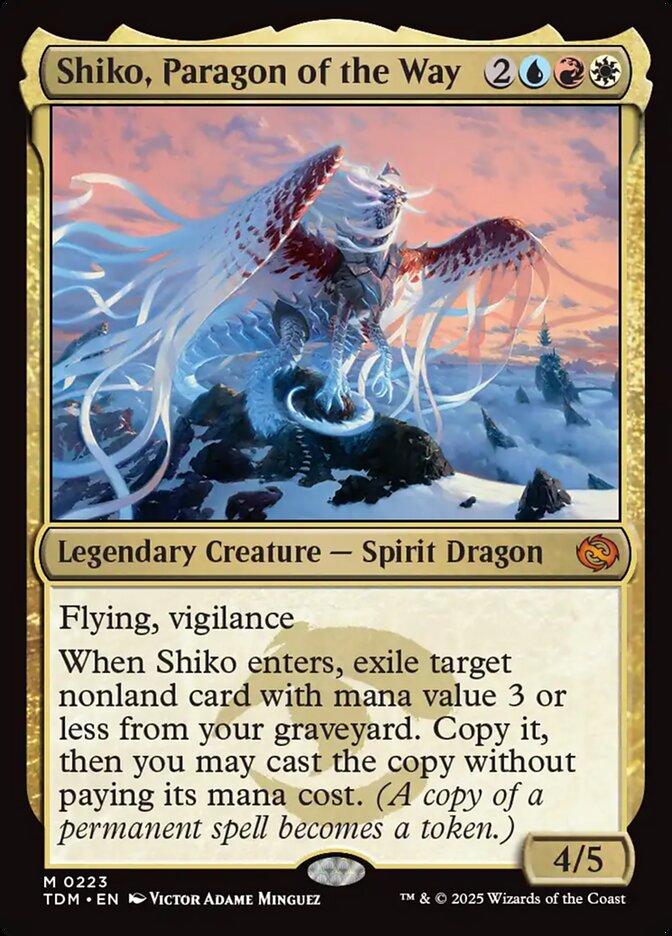
- Cast a spell out of their graveyard with Shiko but left it in the graveyard instead of exiling it
- Put the two permanents targeted by Marang River Regent’s Enters ability into their graveyard instead of their hand
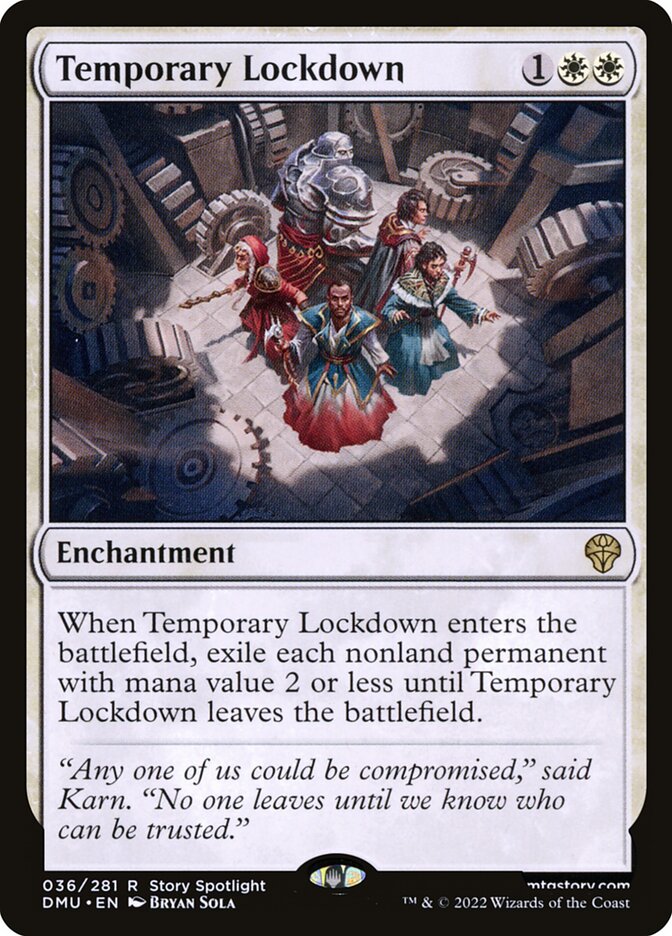
- Accidentally exiled a creature with mana value 4 to a Temporary Lockdown
There are two common mistakes I’ve seen made in regard to this partial fix. The first is thinking it has a time duration / cutoff point. Noting how many turns it has been or how many game actions have taken place since the point of the error is excellent, but it doesn’t necessarily preclude applying this fix. If someone cast an Omen and put it into their graveyard, we can shuffle it into the random portion of the library where it’s supposed to be even if the mistake was eight turns ago.
The second mistake here is forgetting this doesn’t apply if fixing it now would be too disruptive to the game. Most of the time, if someone forgets to exile their card with Shiko, we can move it over to exile with no major problems. But if the players currently have a stack that’s nine cards deep, all fighting over something targeting that same card, this probably doesn’t apply.
As always, my advice is that if you’re only 99% sure on whether this is the right fix, talk it over with another judge.
On To Rules
There were two bits of rules that are not exceptionally difficult, but worth discussing because multiple players reported they worked differently on an online client. It’s always good to know what is going wrong in digital Magic because players are likely to try those same plays in paper.
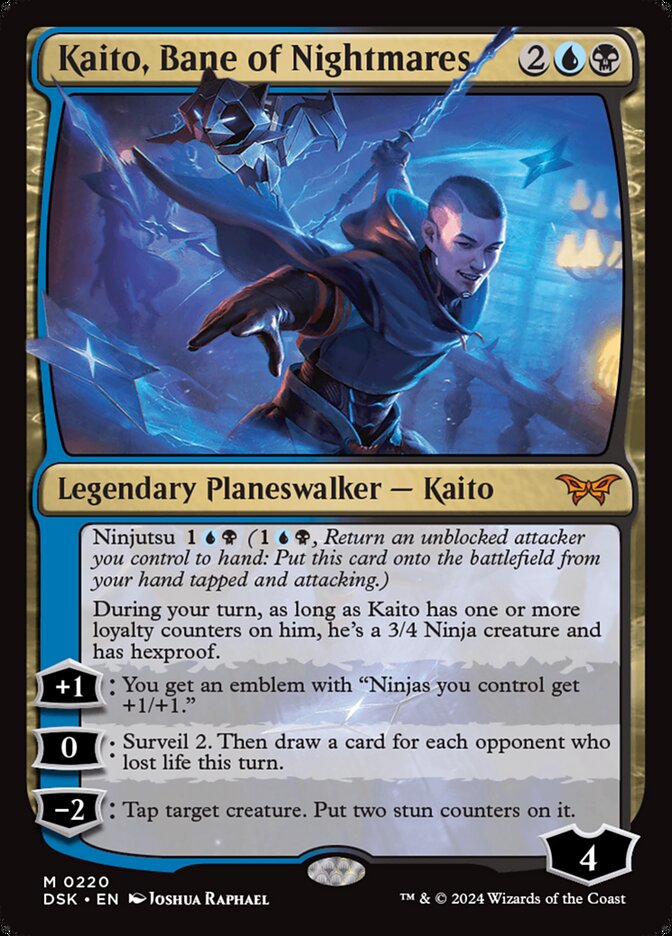
702.49a Ninjutsu is an activated ability that functions only while the card with ninjutsu is in a player’s hand. “Ninjutsu [cost]” means “[Cost], Reveal this card from your hand, Return an unblocked attacking creature you control to its owner’s hand: Put this card onto the battlefield from your hand tapped and attacking.”
Magic Comprehensive Rules
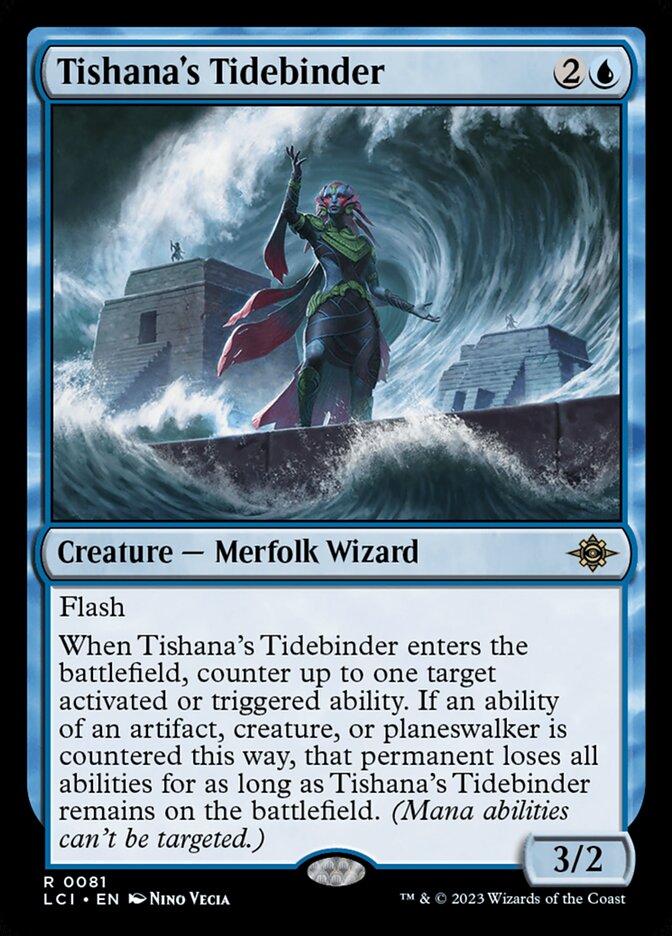
The cost of activating an ability is everything to the left of the colon. Here, the cost is to pay the relevant mana, reveal the card from the hand, and return an unblocked attacker to hand. Tishana’s Tidebinder can counter that activated ability for quite the tempo gain, but it should result in both the Kaito and the attacker being in the hand.
The bug here is that when the Ninjutsu ability is countered the Kaito can end up in the graveyard.
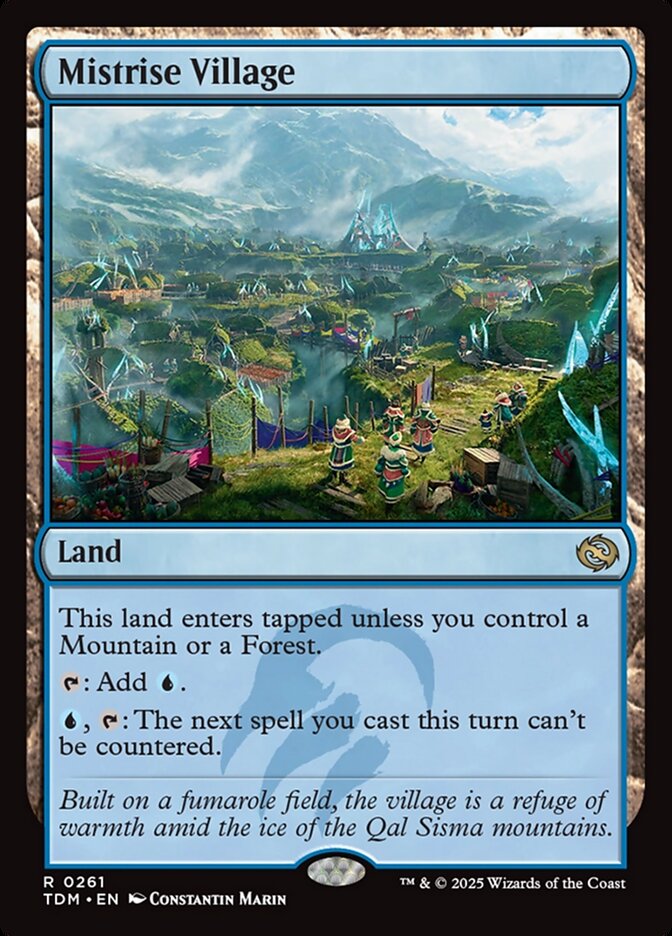
Another reported bug is on Mistrise Village. The card states that the next spell cast will be uncounterable, and it should not be able to affect anything that is already on the stack at the time the ability is activated. Activating the Village in response to a counterspell should have no effect on what the counterspell will do.
On to the actually interesting rules questions!
One call I got fewer times than expected also involved Kaito and an opposing Tishana’s Tidebinder. The setup here goes like this: AP has a Kaito, Bane of Nightmares in play. They activate one of the loyalty abilities, and NAP counters it with a Tidebinder. What is the status of the Kaito?
Luckily, the answer here is very clear and unambiguous: it depends.
Wait. What?
Don’t panic – the only “dependency” here is whose turn it is.
This one is a layers question, so let’s start by refreshing ourselves on the order of layers:
- Copy
- Control
- Text
- Type
- Color
- Abilities
- Power/Toughness
Nothing is happening in the Copy layer, or Control, or Text. Our first relevant bit here is in the Type layer, where the Kaito’s ability will turn it into a 3/4 creature during the controller’s turn. This ability does nothing during the controller’s opponent’s turn.
Nothing happens in the Color layer. In the Abilities layer, Kaito’s ability grants itself Hexproof and then we wipe the card clean due to the Tidebinder as it has a later timestamp. In the Power/Toughness layer, it becomes a 3/4.
Putting it together: On the Kaito’s controller’s turn, the Kaito’s ability makes it a creature in the Type layer. In the Abilities layer, he gets Hexproof, then he loses all abilities, including Hexproof. So he’s a 3/4 creature with no abilities. During the other player’s turn, Kaito’s ability won’t do anything, so he’ll just be a planeswalker (again with no abilities).
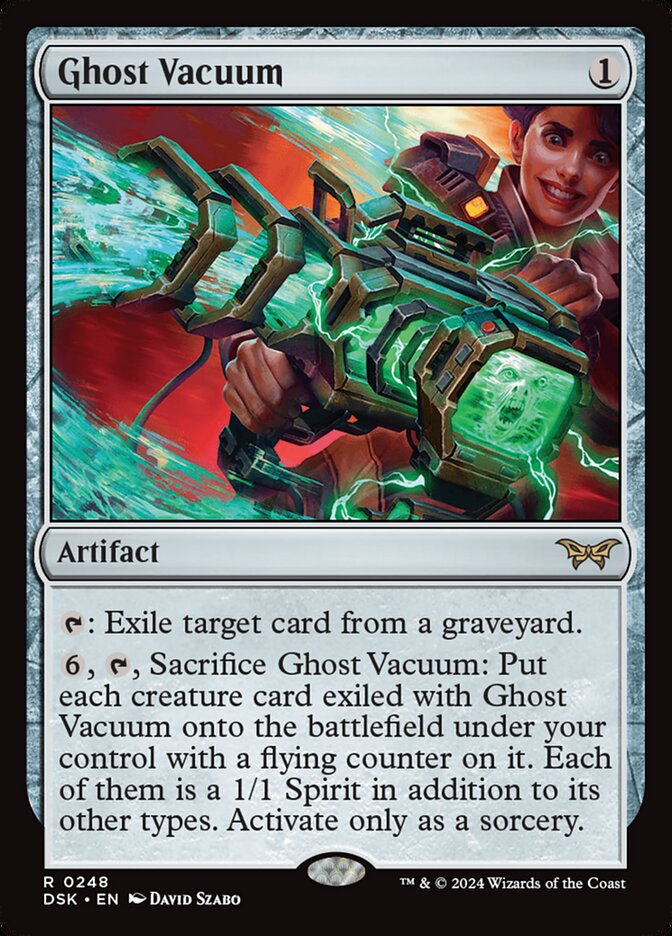
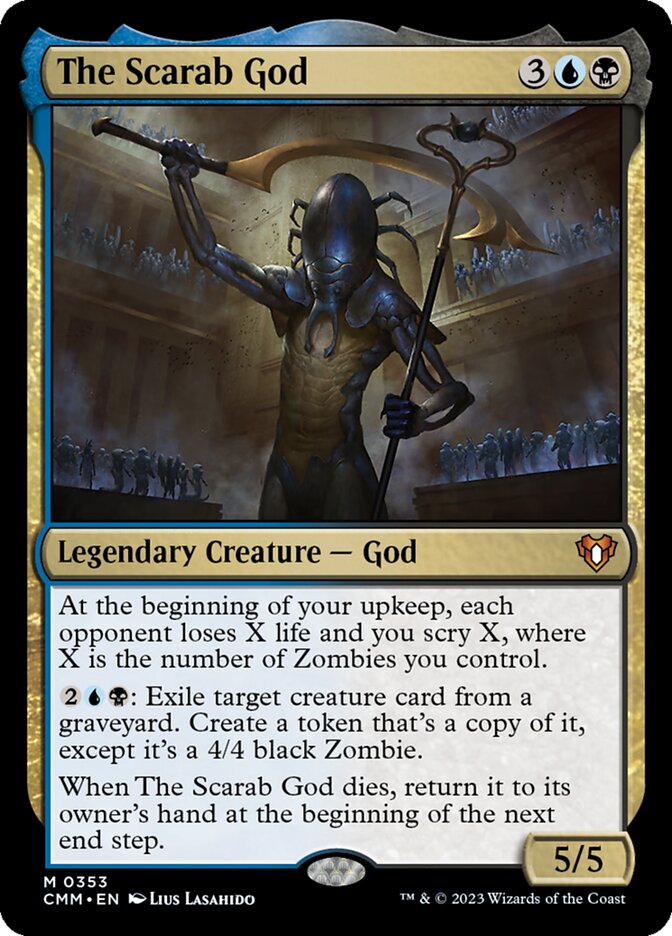
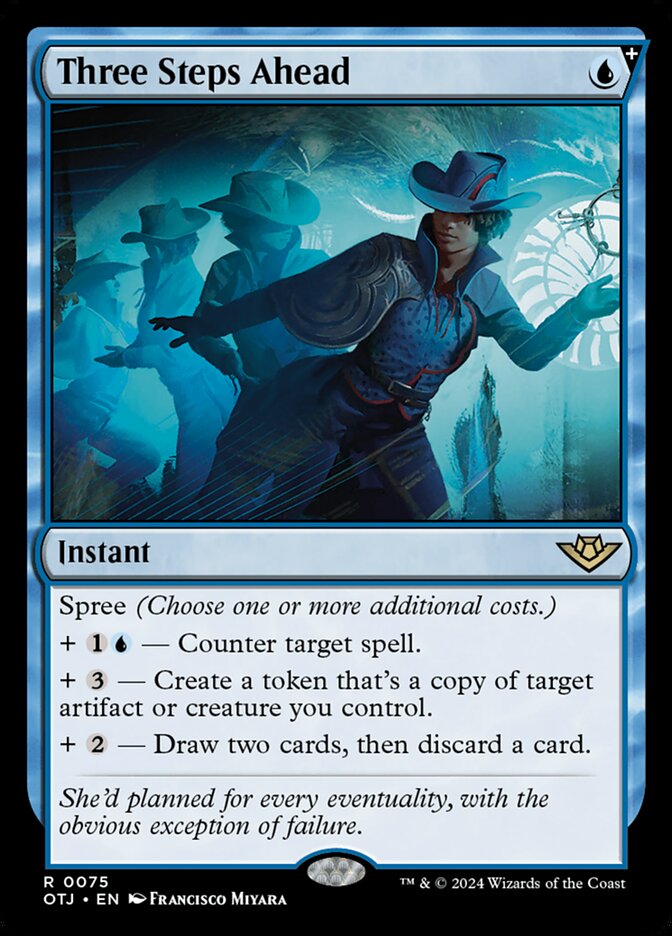
The most interesting rules call of the weekend revolved around an object’s copiable characteristics. The situation is: NAP has, on previous turns, cast a Ghost Vacuum, exiled their opponent’s creature, and then sacrificed the Vacuum to put the creature onto the battlefield. Now it is AP’s turn and NAP would like to cast Three Steps Ahead to make a token copy of their Spirit.
What will the resulting token be? A 1/1 Spirit, or the original creature?
The follow-up question is: After delivering the ruling, the player says “But judge! That’s different than I remember when copying a creature made with The Scarab God. Why is this not the same?”
The TLDR is that copying a creature made with Ghost Vacuum results in a normal creature like it was fresh from a booster pack. Copying a creature made with The Scarab God makes a 4/4 black zombie. I’ll update this if/when I have a moment to get into the CR, but at the moment I’m late for exploring Berlin, and want to get this out the door in time for everyone judging at RC Minneapolis this weekend.
If that seems like a copout, well…maybe it is. But hey — it’s my blog; I make the rules : P
Update: Ghost Vacuum has a type-changing effect (layer 4), so it does not change the permanent’s copiable characteristics. A copy of a Ghost Vaccuumed Grizzly Bear is a 2/2 Bear, not a 1/1 Bear Spirit.
205.1b Some effects change an object’s card type, supertype, or subtype but specify that the object retains a prior card type, supertype, or subtype. In such cases, all the object’s prior card types, supertypes, and subtypes are retained. This rule applies to effects that use phrases such as “in addition to its other types.”
Scarab God has a copy effect (layer 1), so it does change the permanent’s copiable characteristics. If Scarab God exiled a Grizzly Bear, a copy of the resulting token is a 4/4 Zombie, not a 2/2 Bear.
707.9b Some copy effects modify a characteristic as part of the copying process. The final set of values for that characteristic becomes part of the copiable values of the copy.
Huge thanks to everyone on staff at the RC for working hard to make a great event and Fanfinity for having me out. This post was also much more of a group effort than most – thanks to The Azorius Senate for proofreading and input, and David Lyford-Tilley and Steven Zwanger for help with the Copy rules.