
Note: This is a candidate page for a Judge Foundry Election. Information on this page is provided by the candidate, and does not represent the opinions or positions of the Elections Committee or of Judge Foundry. For more information about this election, see the schedule and index for the Elections at the 2025 Annual Meeting.
- Name: Khailyn Schaefer
- Location: Appleton, Wisconsin
- Election: 2025 Annual Meeting
- Running For: Member of the Board of Directors
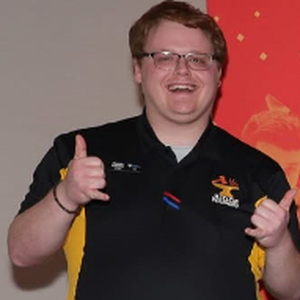
Nomination Statement
My name is Khailyn Schaefer, and I am a Level 3 Judge with Judge Foundry. I am running for the Board of Directors because I believe deeply in the value of mentorship, purpose-driven leadership, and creating collaborative spaces for growth. I want to help others achieve their goals by fostering goal-oriented conversations, supporting inclusive and constructive dialogue, and encouraging judges at all levels to seek out mentorship and meaning in their journeys.
I have been a judge for over three years, maintaining my L1 and L2 certifications under Judge Academy since 2022 and certifying as a Level 3 judge with Judge Foundry in March 2025. For the past year, I have served as the Regional Advocate of the Great Lakes Region (Wisconsin, Illinois, Indiana, Ohio, and Michigan), where I am one of only three L3+ judges. In that role, I provide essential mentorship, certification support, and relationship-building within a developing regional ecosystem.
Outside of judging, I am a science educator in K–12, where I collaborate with a wide range of experts—from special education and behavioral intervention specialists to administrators and academic coaches. This has sharpened my ability to communicate, reflect, and set goals with diverse stakeholders, a skill set I bring to the table as a prospective Board member.
My tenure as Regional Advocate has been deeply focused on education and mentorship. I established a regional Discord server to build community, hosted two conferences centered on judge employability skills, and contributed nationally through service on the Community Project Grants Approval Committee. I also collaborate as a writer and reviewer for The Knowledge Pool Project, support judge certification across my region, and co-designed a resource hub website in collaboration with fellow L3+ judges.
One of my proudest accomplishments is co-founding the Judge Resources project, a website I developed in collaboration with fellow L3 judge Ryan Sears. The site hosts a growing library of judge materials—from tournament logistics and event management guides to rules and policy practice—designed to support judges at all levels. While Ryan and I constructed the site, its success has been shaped by the insights and feedback of dozens of community members. The project is intentionally “living,” allowing for continuous updates and contributions. My long-term vision is to evolve this platform into a full-fledged learning management system to enhance judge development and discovery.
I also prioritize meaningful mentorship and review writing, and I’m consistently thanked for the clarity, specificity, and goal-setting I bring to post-event feedback. Additionally, I have received strong and positive feedback for hosting conferences focused on employability skills, effective workplace communication, and managing event transitions—topics often overlooked but vital to professional success in judging.
I understand that serving on the Board requires balancing strategic oversight with the realities of community needs. I plan to transition my regional responsibilities to a new Regional Advocate, whom I will mentor and support through regular communication and reflection. This ensures continuity for the Great Lakes Region while allowing me to fully dedicate myself to Board duties.
I believe good decision-making on the Board must be data-informed and transparency-focused, grounded in clear facts and open communication with stakeholders. Throughout my service, I will prioritize being goal-oriented, reflective, and empathetic, fostering an environment where honest feedback and diverse perspectives guide our collective efforts.
With your support, I look forward to working alongside fellow board members and the broader community to strengthen Judge Foundry’s impact, foster inclusivity, and nurture the next generation of judges. Thank you for considering my nomination.
Q1: Judge Program Direction
Question: It appears that one of this board’s main responsibilities will be to either navigate our relationship with Wizards of the Coast’s new Judge Program Manager, or manage a transition from Judge Foundry back to Wizards of the Coast. How would you navigate this situation?
Navigating our relationship with Wizards of the Coast will require transparency, collaboration, and a deep respect for the institutional knowledge we’ve built within Judge Foundry. If elected, I would prioritize open communication with the new Judge Program Manager while ensuring that the values and infrastructure we’ve developed—especially in judge education and community support—are preserved and shared effectively.
In the event of a transition back to Wizards, my focus would be on capturing and transferring key knowledge through documentation, collaborative tools, and direct input from those who’ve shaped our current systems. I believe strongly in consulting experienced and knowledgeable judges—those who have built, led, and maintained our projects, policies, and mentorship structures. Their insight is essential to any decision that affects our future.
Through my work as a Regional Advocate and judge educator, I’ve learned how to guide communities through change with empathy, clarity, and inclusion. I would bring those same principles to this process, ensuring that whatever the outcome, our judges remain informed, empowered, and supported. Most importantly, our next steps must be grounded in service to the community, with intentional spaces for feedback and open discussion at every phase.
Q2: Non-Profit Administration
Question: What skills, experience, or plans would you bring to this role in non-profit administration?
I bring both practical experience and a planning mindset that directly aligns with nonprofit administration. I previously served on a YMCA Childcare committee, where we focused on optimizing care quality relative to cost, a balance at the heart of nonprofit decision-making. In college, I contributed to grant writing for research initiatives and budget planning for residential programming, giving me early hands-on experience with resource stewardship and stakeholder alignment.
Professionally, I’ve developed and taught multiple science courses from scratch, using backward design to structure content from long-term goals down to daily lessons. This same skill set—goal setting, scaffolding, and feedback integration—applies to strategic planning and organizational governance. Within Judge Foundry, I’d bring this mindset to areas like project accountability, documentation systems, and long-term member development planning.
Importantly, I believe that nonprofits cannot meet their goals or thrive without committed volunteers. I want to help empower regional leadership to encourage others to pursue meaningful projects, mentorship roles, and personal development goals, ensuring that our volunteer base remains active, fulfilled, and well-supported.
Q3: Member Benefits and Resources
Question: How do you think Judge Foundry should best use its limited resources to benefit the members?
Judge Foundry’s greatest value lies in how it supports the ongoing growth of its members. Beyond certifications, I believe resources should be prioritized toward educational programming, feedback opportunities, and mentorship or networking structures that keep judges connected and engaged. These systems are what give our members a sense of purpose, belonging, and professional direction.
I would advocate for a re-evaluation of how conferences are led and supported, ensuring that they are accessible, content-rich, and empowering for organizers and attendees alike. I’d also like to see intentional structures for member feedback—not just surveys, but real conversations with judges, TOs, and regional leaders—so that resource decisions reflect what members truly want and need.
Personally, I’ve been inspired and encouraged by current Board members who took the time to engage me in meaningful conversation, whether to support a project idea or nudge me toward broader involvement. That kind of authentic encouragement made a real difference in my path, and I want Judge Foundry to continue investing in the people behind the projects.